

100,-
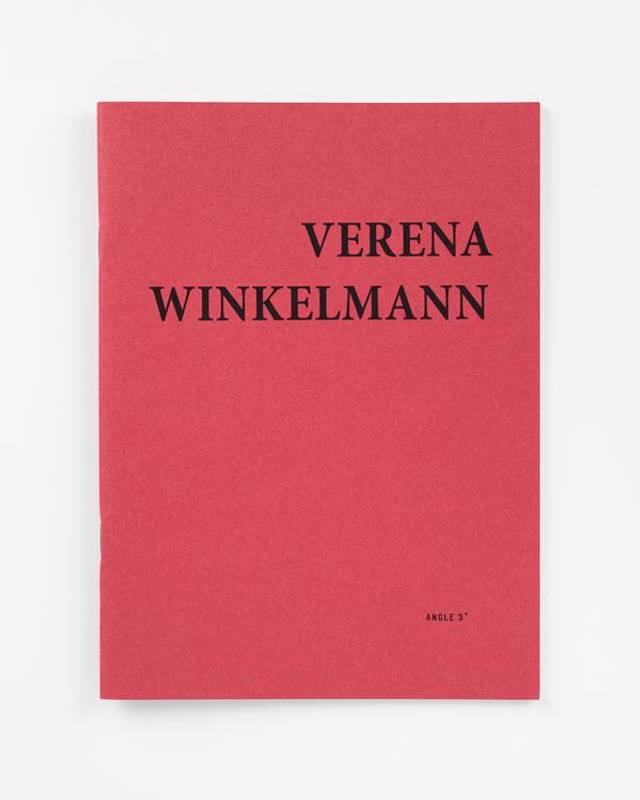


Angle 3° by Verena Winkelmann
Chingachgook
14,8 x 20 cm
24 pages
Offset print
Edition of 300, numbered
Since 2003 Verena Winkelmann has had the book as the central focus of her production. The book form enables an exploration of how photography can be read, and helps her to challenge the photographic medium. Winkelmann processes a large number of photographs over time, rejecting many pictures along the way. She is interested in creating autonomous images which, in addition to being individual pictures, must also be able to function in a larger totality, in a series consisting of many parts.
In Chingachgook Winkelmann has photographed in large format at night in the forests scattered around Telemark and East Agder. The experience of losing someone close lies as a backdrop, something to which the title also alludes. Chingachgook was the name of the ‘last of the Mohicans’ and the name is used here as a symbol of something that will inevitably vanish, something that is dying out. Nature is shown in a sensitive, dark, grey scale with dense pine forest, reflecting water and bare crags, here visualizing the inconceivable and the sublime. No humans are in the forest now, but a white horse is fixated at full length, swelling slowly in the rain.

Multipres er et lite kunstnerdrevet forlag. Vi har hovedfokus på kunstnerbøker med kamerabasert kunst.
100,-
100,-
100,-
100,-
100,-
100,-
100,-
100,-
100,-
100,-
100,-
100,-
100,-
100,-
100,-
100,-
100,-
100,-
100,-
100,-
100,-
100,-
100,-
100,-
100,-
100,-
100,-
380,-
120,-
120,-
Meld deg på nyhetsbrevet vårt og vær oppdatert med alle nyhetene våre først


Søk er ikke tilgjengelig akkurat nå. Prøv igjen om et øyeblikk.
Prøv å endre søketermene eller utforsk kategoriene våre.


